

AI Trends in 2026: 10 Breakthrough Technologies Changing the Future AI has moved far beyond being a tech industry buzzword. In 2026, it’s helping businesses answer customer questions, assisting doctors with medical analysis, supporting students with personalized learning, and enabling creators to produce content faster than ever before.
At the same time, the technology is evolving rapidly. New capabilities are emerging, regulations are tightening, and organizations are discovering that successful AI adoption requires more than simply installing the latest software.
Table of Contents
- Why AI Is Entering a New Phase of Growth
- AI Agents Are Moving Beyond Chatbots
- Multimodal AI Is Making Technology More Natural
- Industry-Specific AI Is Delivering Better Results
- Smaller AI Models Are Becoming More Practical
- AI-Powered Search Is Reshaping Online Discovery
- Generative AI Is Maturing Beyond Content Creation
- Responsible AI Is Becoming a Business Requirement
- How AI Is Transforming Major Industries
- Human-AI Collaboration Is Redefining Work
- How Businesses Can Prepare for AI in 2026
- Common AI Adoption Mistakes to Avoid
- Frequently Asked Questions
- Final Thoughts
Why AI Is Entering a New Phase of Growth
The conversation around artificial intelligence has changed significantly over the last few years. Initially, much of the attention focused on what AI might do in the future. In 2026, the focus has shifted toward what AI is already accomplishing today.
Businesses are no longer asking whether they should explore AI. Instead, they’re asking more practical questions:
- Which processes should be automated?
- How can AI improve customer experience?
- Where can it reduce costs or save time?
- What risks need to be managed?
Several factors are driving this shift:
- More accessible AI tools
- Improved computing infrastructure
- Better model performance
- Growing demand for workplace efficiency
- Increased familiarity among everyday users
The result is a technology that is becoming part of routine operations rather than a standalone innovation project. The Best Project Management Software: 2026 – nowstrends.com
AI Agents Are Moving Beyond Chatbots
One of the most significant AI trends in 2026 is the rise of AI agents. Many people still think of AI as a chatbot that answers questions. AI agents go much further.
What Makes AI Agents Different?
Instead of simply responding to prompts, AI agents can:
- Plan tasks
- Make decisions based on objectives
- Use software tools
- Execute multi-step workflows
- Adapt based on outcomes
In practical terms, they function more like digital team members than traditional software.
A Real-World Example
Consider a small e-commerce business.
A few years ago, the owner might have spent hours each week:
- Checking inventory
- Reviewing customer inquiries
- Creating sales reports
- Monitoring product performance
Today, an AI agent can handle much of that workload automatically while keeping the owner informed of important exceptions.
The business owner remains in control, but repetitive administrative work is significantly reduced.
Why This Matters
Many organizations have discovered that the biggest value of AI isn’t replacing employees—it’s freeing them from routine tasks so they can focus on higher-value work.
That distinction is becoming increasingly important as businesses evaluate AI investments.
Multimodal AI Is Making Technology More Natural
People rarely communicate using only one type of information.
We speak, write, show images, watch videos, and interpret visual cues simultaneously.
Modern AI systems are beginning to work in the same way.
What Is Multimodal AI?
Multimodal AI can understand and combine multiple forms of input, including:
- Text
- Images
- Audio
- Video
- Documents
Instead of treating these inputs separately, the system processes them together to provide more relevant responses.
Everyday Use Cases
Imagine a student struggling with a math problem.
Rather than typing a lengthy explanation, they can:
- Take a photo of the problem.
- Ask a spoken question.
- Receive a step-by-step explanation.
The interaction feels much closer to working with a human tutor.
Business Applications
Companies are using multimodal AI to:
- Analyze customer support calls
- Review uploaded documents
- Process visual inspections
- Interpret meeting recordings
These capabilities are reducing friction and improving productivity across departments.
Industry-Specific AI Is Delivering Better Results
One lesson organizations have learned is that general-purpose AI isn’t always the best solution.
Different industries face different challenges, regulations, and workflows.
A hospital, for example, requires entirely different capabilities than a logistics company or online retailer.
Why Specialized AI Is Growing
Organizations increasingly prefer AI systems trained on:
- Industry terminology
- Internal knowledge bases
- Regulatory requirements
- Historical business data
This often produces more accurate and reliable outcomes.
Examples Across Industries
Healthcare
AI is helping medical teams:
- Review diagnostic images
- Organize patient records
- Streamline administrative tasks
Manufacturing
Manufacturers use AI for:
- Equipment monitoring
- Defect detection
- Production optimization
Financial Services
Financial institutions apply AI to:
- Fraud detection
- Risk analysis
- Customer support
The trend is clear: businesses are moving away from one-size-fits-all AI and toward solutions tailored to their specific needs.
Smaller AI Models Are Becoming More Practical
For several years, headlines focused on building increasingly massive AI models. While large models remain important, many organizations are now prioritizing efficiency.
Bigger Isn’t Always Better
Large AI systems can be expensive to run and maintain.
For many use cases, smaller models provide:
- Faster response times
- Lower operating costs
- Improved privacy controls
- Easier deployment
A Practical Scenario
Imagine a customer service department. It doesn’t necessarily need an AI trained on vast amounts of internet data.
What it needs is an AI that understands:
- Company policies
- Product documentation
- Frequently asked questions
A focused model often performs better because it’s trained for a specific purpose. This shift toward efficiency is likely to accelerate throughout 2026 and beyond.
AI-Powered Search Is Reshaping Online Discovery
Search behavior is changing rapidly. People increasingly expect direct answers rather than long lists of links.
The New Search Experience
Modern AI-powered search tools can:
- Summarize information
- Compare options
- Answer follow-up questions
- Provide context instantly
Instead of opening ten browser tabs, users often receive a useful overview within seconds.
What This Means for Website Owners
As someone who works with online content, one trend stands out clearly: Generic articles are struggling to stand out.
Search platforms increasingly favor content that includes:
- Original insights
- Expert perspectives
- Real-world examples
- Unique experiences
This means businesses and publishers must focus on creating genuinely useful content rather than simply targeting keywords.
Generative AI Is Maturing Beyond Content Creation
When generative AI first gained mainstream attention, most discussions centered on writing articles and creating images.
The technology’s role has expanded considerably.
How Businesses Are Using Generative AI
Organizations now use generative AI to:
- Draft reports
- Build software prototypes
- Generate presentations
- Create marketing assets
- Produce training materials
The goal isn’t complete automation.
The goal is accelerating the first draft so humans can focus on refinement and decision-making.
A Common Misunderstanding
One mistake organizations frequently make is assuming AI-generated content is ready for publication immediately.
In reality, the best results come when humans:
- Verify facts
- Add expertise
- Adjust tone
- Provide context
AI can speed up production, but human judgment remains essential.
Responsible AI Is Becoming a Business Requirement
As AI adoption grows, so do concerns about trust, transparency, and accountability.
These discussions are no longer limited to policymakers and researchers.
Business leaders are paying attention too.
Key Areas of Concern
Organizations are increasingly evaluating:
- Data privacy
- Security risks
- Bias in AI outputs
- Intellectual property issues
- Regulatory compliance
Why Trust Matters
Customers are becoming more aware of how AI influences decisions.
Organizations that demonstrate responsible AI practices often gain stronger credibility and customer confidence.
In many industries, trust may become just as important as technical capability.
How AI Is Transforming Major Industries
AI adoption looks different across sectors, but certain patterns are emerging.
Healthcare
Healthcare organizations are using AI to support professionals with:
- Medical imaging analysis
- Workflow automation
- Administrative efficiency
Importantly, AI is serving as a support tool rather than a replacement for clinical expertise.

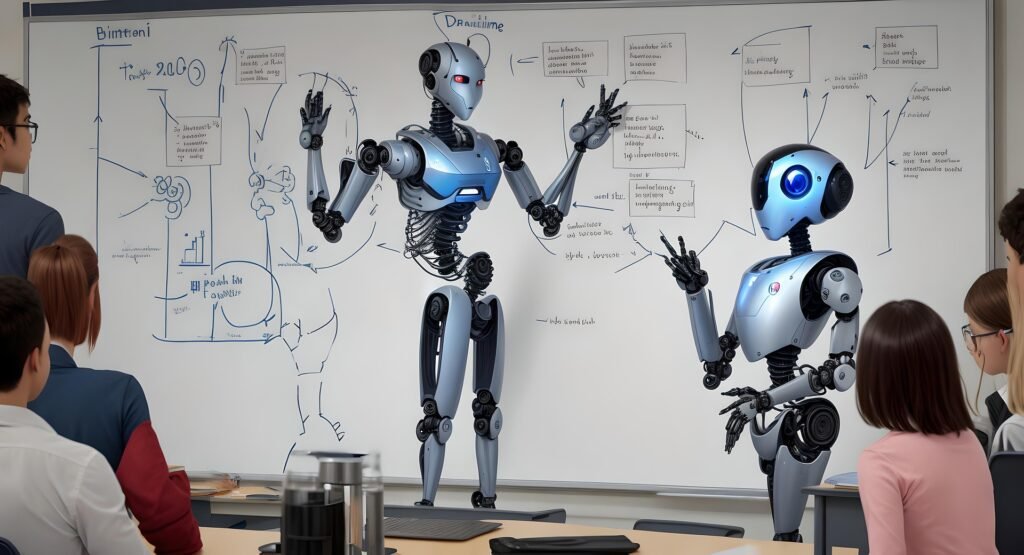
Education
Educational institutions are exploring AI-driven learning experiences that adapt to individual student needs.
Teachers can spend less time on repetitive administrative work and more time supporting learners.
Manufacturing
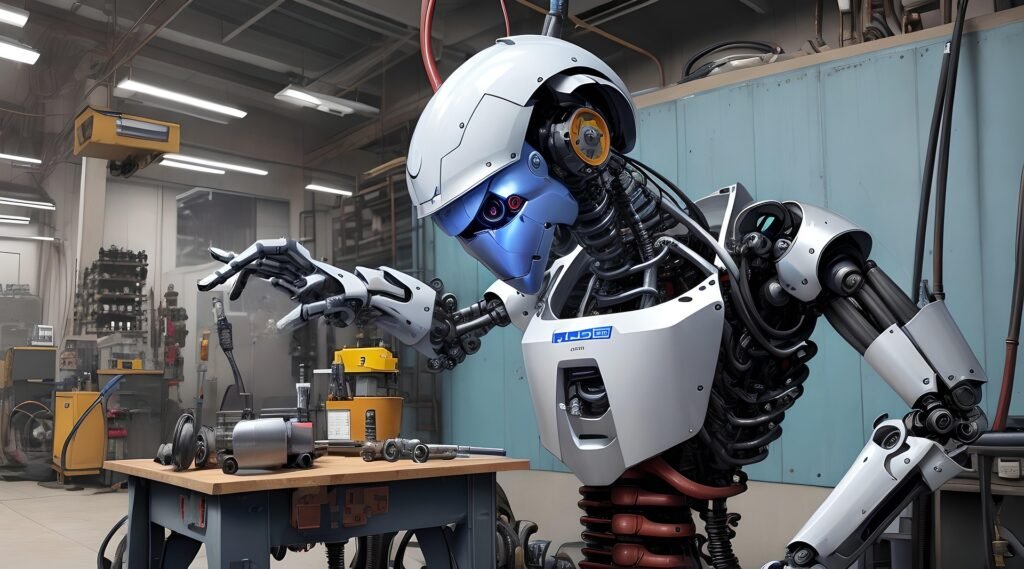
Manufacturers are leveraging AI to predict equipment failures before they occur.
Even a small reduction in downtime can produce substantial financial savings.
Retail
Retailers use AI to:
- Forecast demand
- Optimize inventory
- Personalize recommendations
- Improve customer service
The result is a more efficient and responsive customer experience.
Human-AI Collaboration Is Redefining Work
One of the most persistent fears surrounding AI is job displacement. While automation is changing certain roles, the reality inside many organizations is more collaborative than people expect.
The Most Successful Teams Use Both
Consider a customer support specialist.
AI can:
- Draft responses
- Summarize conversations
- Suggest solutions
The employee then reviews, edits, and personalizes the final communication. The outcome is often better than either human-only or AI-only workflows.
Skills That Are Becoming More Valuable
As AI handles routine tasks, human strengths become increasingly important.
These include:
- Critical thinking
- Creativity
- Communication
- Leadership
- Strategic planning
- Relationship building
These skills remain difficult to automate and continue to drive business value.
How Businesses Can Prepare for AI in 2026
Organizations don’t need massive budgets or dedicated AI departments to begin benefiting from artificial intelligence.
Step 1: Identify Repetitive Work
Start by finding tasks that consume significant time but create limited strategic value.
Examples include:
- Data entry
- Scheduling
- Report generation
- Basic customer inquiries
Step 2: Start Small
Avoid trying to transform the entire business overnight.
Begin with one focused project and measure results carefully.
Step 3: Train Employees
Technology adoption succeeds when employees understand:
- What AI can do
- What AI cannot do
- When human judgment is required
Step 4: Establish Governance
Create clear policies around:
- Data handling
- Security
- Accuracy checks
- Responsible usage
This becomes increasingly important as AI tools spread throughout an organization.
Common AI Adoption Mistakes to Avoid
Even well-intentioned AI projects can struggle when expectations are unrealistic.
Expecting Instant Results
AI implementation often requires experimentation and adjustment.
Ignoring Data Quality
Poor data produces poor outcomes, regardless of how advanced the AI system is.
Chasing Trends
Adopting AI simply because competitors are doing so rarely creates sustainable value.
Removing Human Oversight
AI performs best when supported by knowledgeable professionals who can validate outputs and make final decisions.
Frequently Asked Questions
What are the biggest AI trends shaping 2026?
The most influential developments include AI agents, multimodal AI, industry-specific solutions, AI-powered search, generative AI advancements, and growing emphasis on responsible AI practices.
How is artificial intelligence changing businesses?
AI is helping organizations automate repetitive tasks, improve operational efficiency, enhance customer experiences, and make faster data-driven decisions.
Will AI replace human workers?
Most experts expect AI to transform jobs rather than eliminate them entirely. Many roles will evolve, with humans focusing more on strategy, creativity, and decision-making.
Which industries are benefiting most from AI?
Healthcare, education, manufacturing, finance, logistics, retail, and customer service are among the sectors seeing significant adoption and measurable results.
Why is responsible AI important?
Responsible AI helps organizations maintain trust, protect user data, reduce bias, and comply with emerging regulations while minimizing potential risks.
What skills should people develop for an AI-driven future?
Critical thinking, communication, creativity, problem-solving, adaptability, and AI literacy are among the most valuable skills in an increasingly AI-enabled workplace.
Final Thoughts
The most important AI trends in 2026 are not about machines becoming smarter in isolation. They are about how humans and intelligent systems are learning to work together more effectively.
AI agents are taking on complex workflows. Multimodal systems are making technology easier to use. Industry-specific solutions are delivering measurable business outcomes. At the same time, concerns around trust, privacy, and responsible deployment are shaping how organizations adopt these tools.
The organizations gaining the most value from AI aren’t necessarily the ones using the newest technology. They’re the ones solving real problems, improving workflows, and keeping human expertise at the center of decision-making.
For individuals, the opportunity is similar. Learning how to work alongside AI—rather than viewing it as a replacement—may be one of the most valuable career advantages in the years ahead.
As 2026 unfolds, one thing is becoming increasingly clear: artificial intelligence is no longer an emerging trend. It’s becoming part of the everyday infrastructure that powers how we work, learn, create, and do business.
learn programming with AI from How to choose AI Translator Earbuds in 2026 – nowstrends.com
Google Gemini vs ChatGPT (2026): Which AI Assistant Is Actually Better? – nowstrends.com
Supabase vs MongoDB Atlas: Best Cloud Database 2026 – nowstrends.com
[…] Read about AI Trends in 2026: 10 Breakthrough Technologies Changing the Future – nowstrends.com […]
[…] AI Trends in 2026: 10 Breakthrough Technologies Changing the Future – nowstrends.com […]
[…] AI Trends in 2026: 10 Breakthrough Technologies Changing the Future – nowstrends.com […]
[…] AI Trends in 2026: 10 Breakthrough Technologies Changing the Future – nowstrends.com […]
[…] AI Trends in 2026: 10 Breakthrough Technologies Changing the Future – nowstrends.com […]