

AI Bots & Your Ad Revenue: What You Need to Know The modern web is undergoing a seismic architectural shift. For decades, site security and traffic management operated on a simple binary rule: humans are good, bots are bad.
That model no longer reflects reality. We have officially entered the Agentic Internet, and the way webmasters manage traffic must evolve to protect user experience and Google AdSense revenue.
What is the Agentic Internet?
The Agentic Internet is a modern web ecosystem where autonomous AI agents, digital assistants, and advanced crawlers navigate sites to execute complex, multi-step tasks on behalf of human users. Unlike traditional passive bots that simply scrape data, these agents can research, compare, and transact autonomously.
For digital publishers and AdSense partners, this presents a complex challenge: How do you welcome legitimate AI search indexers without letting unthrottled scrapers drain your server resources, steal your intellectual property, or jeopardize your ad monetization?
The Evolution from Scraping to Action
From Passive Crawlers to Autonomous Decision-Makers
Traditional bots were built to fetch HTML, index pages, or scrape structured data. In contrast, autonomous agents act with intent. They execute end-to-end tasks, such as querying an API, comparing flight prices across multiple domains, or processing e-commerce checkouts.
Consider a user prompting a ChatGPT browser plugin to “find the best reviews for a mechanical keyboard under $100.” The agent actively navigates multiple review sites, reads the DOM, and synthesizes the findings—generating heavy server load without a human ever looking at the screen.
The Rise of Hybrid Traffic Sessions
The line between human and machine interaction is increasingly blurred. In a “hybrid session,” a human user starts browsing manually, then delegates a task to an embedded AI extension.
The session transitions seamlessly from human telemetry (organic mouse movements and scrolls) to programmatic execution (rapid API calls and automated form fills). If your security stack cannot detect this mid-session handoff, your site is vulnerable.
[Internal Link Placeholder: Read our full guide on identifying hybrid bot traffic in Google Analytics]
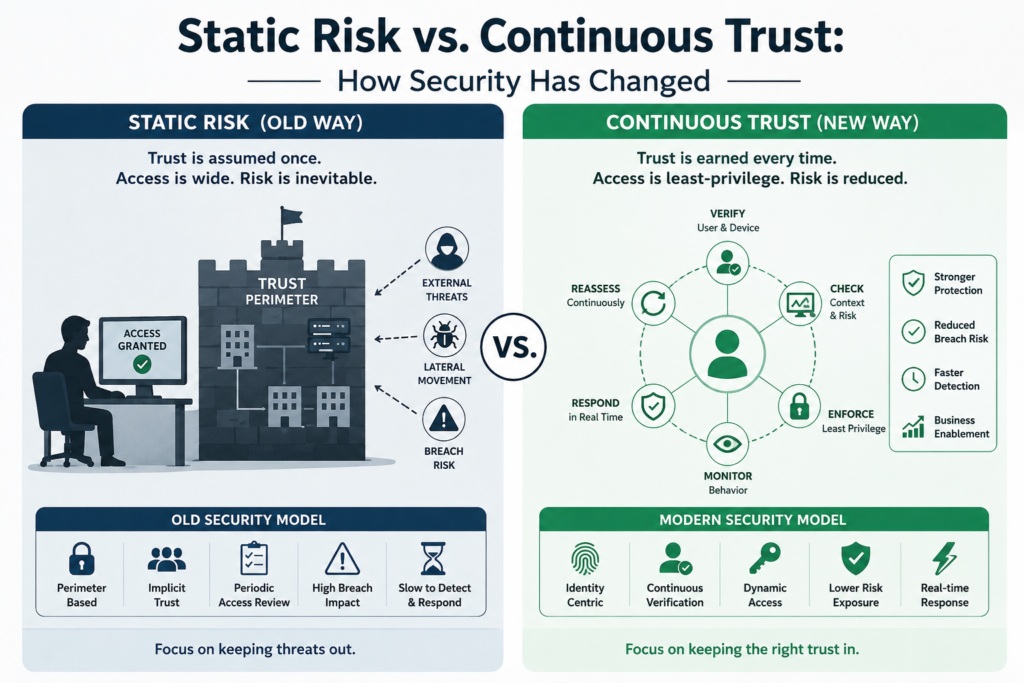
Static Risk vs. Continuous Trust: How Security Has Change
The Failure of Point-in-Time Gatekeeping
Legacy security relies on point-in-time assessment. Think of it like a nightclub bouncer checking IDs at the door. When a visitor requests a page, the Web Application Firewall (WAF) checks their IP reputation or serves a CAPTCHA. Once passed, the user is trusted for the rest of the night.
In the Agentic era, this approach fails. A human can clear an initial Turnstile test, then hand their session cookies to an aggressive automated script. The “bouncer” misses this completely.
The Shift to Continuous Trust Evaluation
To solve this, modern edge networks use Continuous Trust Evaluation. Instead of a bouncer at the door, think of it as a casino pit boss monitoring behavior on the floor. Continuous trust engines evaluate telemetry throughout the entire session:
- Cursor Micro-Movements: Checking for natural human jitter versus rigid, programmatic element selection.
- Request Cadence: Tracking whether intervals match human reading speeds or superhuman burst patterns.
- Behavioral Scoring: Dynamically lowering a session’s trust score when behavior shifts unexpectedly from interactive reading to high-volume GET requests.
Industry Frameworks: BotBase and Precursor
Major infrastructure providers are standardizing bot transparency via registries like Cloudflare’s BotBase. These directories catalog bots based on verifiable identity headers. Bots that declare their intent gain fast-track access, while obfuscated stealth bots trigger immediate WAF challenges.
Good vs. Bad Behaviors on the Agentic Web
Understanding how AI agents behave allows you to design surgical firewall rules.
| Agent Category | Behavior Traits | Impact on Site Resources | AdSense / Monetization Impact | Recommended Policy |
|---|---|---|---|---|
| Verified Search Indexers | Declares identity, respects robots.txt, predictable timing. | Low to Moderate | Positive: Increases Answer Engine (AEO) discoverability. | Allow |
| User Shopping Assistants | Hybrid sessions, executes targeted tasks, intermittent speed spikes. | Moderate | Neutral: No ad interaction, but drives high-intent conversions. | Rate-Limit & Verify |
| AI Training Crawlers | Massive payload requests, ignores crawl-delay, multi-threaded fetching. | Extreme (Bandwidth Drain) | Negative: Zero CPM, drains server resources, scrapes raw content. | Block or Monetize |
| Stealth Aggregators | Spoofs human User-Agents, rotates residential IPs, mimics cursor paths. | High | Critical Threat: Triggers Google Invalid Traffic (IVT) flags. | Challenge / Block |
The Hidden Impact of AI Agents on AdSense Revenue
For ad-monetized publishers, unmanaged agent traffic presents a direct threat to both earnings and account standing.
The Publisher Loss Spiral
- An AI Agent fetches your page HTML directly, skipping external JavaScript and CSS.
- Google Publisher Tags (GPT) never execute, resulting in zero ad viewability.
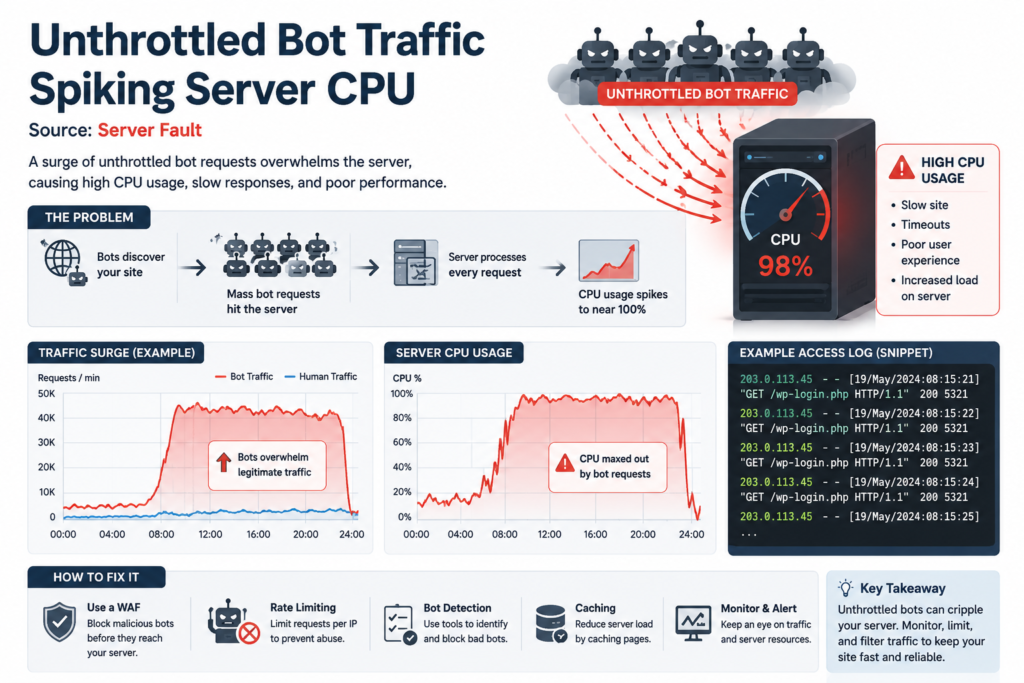
- Unthrottled requests cause server CPU and cloud egress bandwidth costs to skyrocket.
- Stealth bots simulating human clicks trigger automated ad requests.
- Google AdSense flags the domain for Invalid Traffic (IVT), potentially limiting ad serving or suspending the account.
Calculating the Hidden Cost
Serving content to humans yields a CPM (Cost Per Mille) that offsets your server overhead. Serving an unthrottled AI crawler does not.
If a rogue LLM training bot scrapes 100,000 pages from your site in a day, and your average page payload is 2MB, that is 200GB of outbound bandwidth. On standard AWS CloudFront rates ($0.085/GB), that single bot costs you $17 in infrastructure fees while generating exactly $0.00 in ad revenue.
[Internal Link Placeholder: How to appeal a Google AdSense Invalid Traffic (IVT) suspension]
5 Actionable Steps to Secure Your Infrastructure
1. Configure Granular robots.txt Rules
Do not rely on a blanket Disallow. Explicitly differentiate between search indexers (good for SEO/AEO) and aggressive AI training bots (bad for revenue).
Plaintext
# Allow search indexers for AEO visibility
User-agent: Googlebot
Allow: /
User-agent: PerplexityBot
Allow: /

# Block aggressive AI training scrapers
User-agent: CCBot
Disallow: /
User-agent: GPTBot
Disallow: /
2. Implement Nginx Rate Limiting for Non-Browsers
If you manage your own servers, configure Nginx to rate-limit aggressive requests that lack standard browser headers.
Nginx
# Define a limit zone mapping IP to request rate
limit_req_zone $binary_remote_addr zone=ai_limit:10m rate=2r/s;

server {
    location / {
        # Apply rate limit
        limit_req zone=ai_limit burst=10 nodelay;

        # Block known bad user agents entirely
        if ($http_user_agent ~* (Scrapy|Curl|HttpClient)) {
            return 403;
        }
    }
}
3. Deploy Continuous Trust via Edge WAF
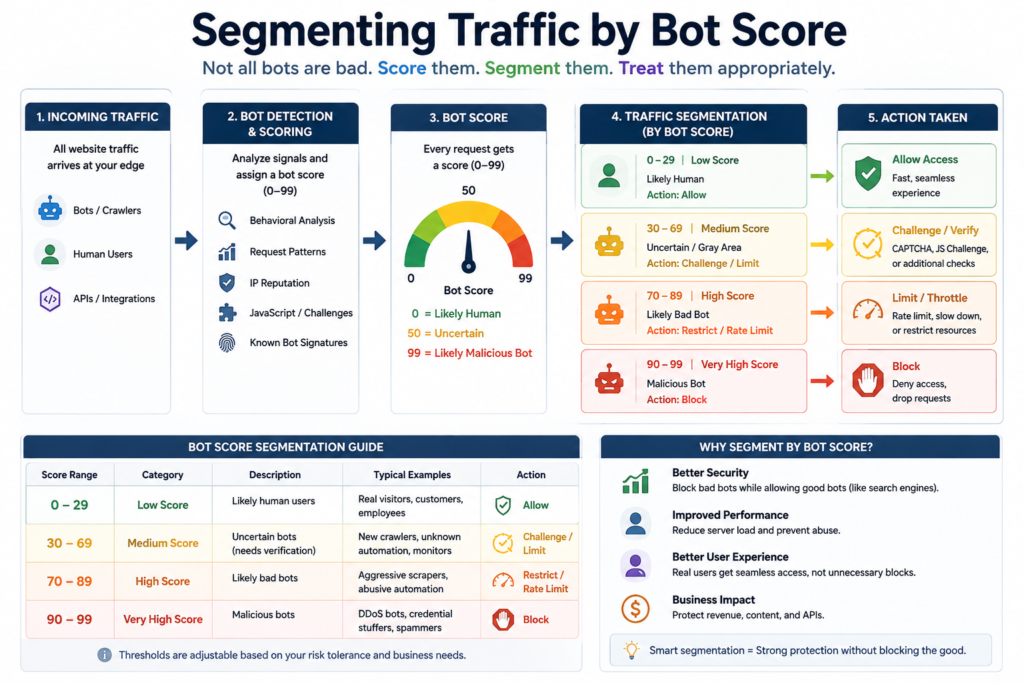
Transition from manual IP blocking to automated edge tools like Cloudflare Bot Management or AWS WAF Bot Control. Write custom WAF expressions to challenge unverified bots scoring low on behavioral trust.
Example Cloudflare Custom WAF Expression: cf.bot_management.score < 30 and not cf.bot_management.verified_bot (Action: Managed Challenge)
4. Audit AdSense Analytics for Traffic Anomalies
Regularly audit your Google Analytics and AdSense dashboards for red flags:
- High pageview volume with zero ad request events.
- Traffic spikes from datacenter ISPs (e.g., AWS, Hetzner, DigitalOcean) masked as consumer desktop browsers.
- Abnormally low session durations (<1 second) paired with 100% bounce rates across archive pages.
5. Segment Content for AEO vs. Scraping
To stay visible in modern search landscapes, publishers must optimize for Answer Engine Optimization (AEO). Allow verified indexing agents to crawl your summary metadata and schema markup, but restrict deeper, computationally heavy endpoints (like dynamic search filters or paginated archives) to verified human sessions only.
Frequently Asked Questions
Do autonomous AI agents click Google AdSense ads? No. Legitimate AI agents do not render display banners or interact with JavaScript ad units. However, rogue stealth bots spoofing human browsers can accidentally trigger fake ad requests, leading Google to flag your account for Invalid Traffic (IVT).
What is the difference between static bot detection and continuous trust? Static detection evaluates a visitor once at the perimeter (e.g., an entry CAPTCHA). Continuous trust evaluation monitors behavioral signals—like mouse tracks and request intervals—throughout the entire session to catch when a human hands control to an automated script.
How do I block bad AI scrapers without harming my SEO? Use targeted blocking. Allow primary search crawlers (Googlebot, Bingbot) while explicitly blocking AI training crawlers (CCBot, GPTBot) via your robots.txt and WAF rules.
What is an agentic hybrid session? A hybrid session alternates between a human user and an AI agent. For example, a human manually reads a blog post, then triggers an AI browser extension to scrape the data, summarize it, and save it to a database—instantly changing the session’s behavioral footprint.
How does unauthorized agent traffic increase server hosting costs? AI agents often make thousands of rapid, automated requests across dynamic pages. Because they bypass static browser caches and request raw data directly, they consume disproportionate CPU, RAM, and server bandwidth—increasing your host infrastructure bill without generating ad revenue.
Read about How to Earn Money Using AI in 2026 – nowstrends.com
The Best Project Management Software: 2026 – nowstrends.com
Cloud Computing in AI 2026: 7 Trends to Watch online – nowstrends.com
What is the best AI tool for students in 2026? – nowstrends.com
[…] Read about AI Bots & Your Ad Revenue: What You Need to Know […]
[…] AI Bots & Your Ad Revenue: What You Need to Know […]